


In 2026, Genbrug København has turned up the volume for new experiments, more local recycling stations and strong partnerships. For you, Recycle Copenhagen means more choices, but also more new schemes to follow. Here you get a quick overview of where Genbrug København is moving now, especially in Recycling Furniture, Sustainable Clothing, Electronics and Building Materials. The article gathers the most important 2026 initiatives and is based on municipal goals, projects and concrete buying angles.
The biggest recycling trends in Copenhagen right now
From flea market to circular everyday life
Recycling in Copenhagen is not just a weekend flea market anymore. It has become a regular part of everyday life, driven by the municipality’s new focus on a stronger recycling culture, local collaborations and more local recycling stations according to the City of Copenhagen’s strategy. The trend is clear:
- More people buy used before new
- More people drop off things locally
- More people are thinking about repairs in the bargain
The big change is that recycling is now about habit, not just price.
What goods are driving demand?
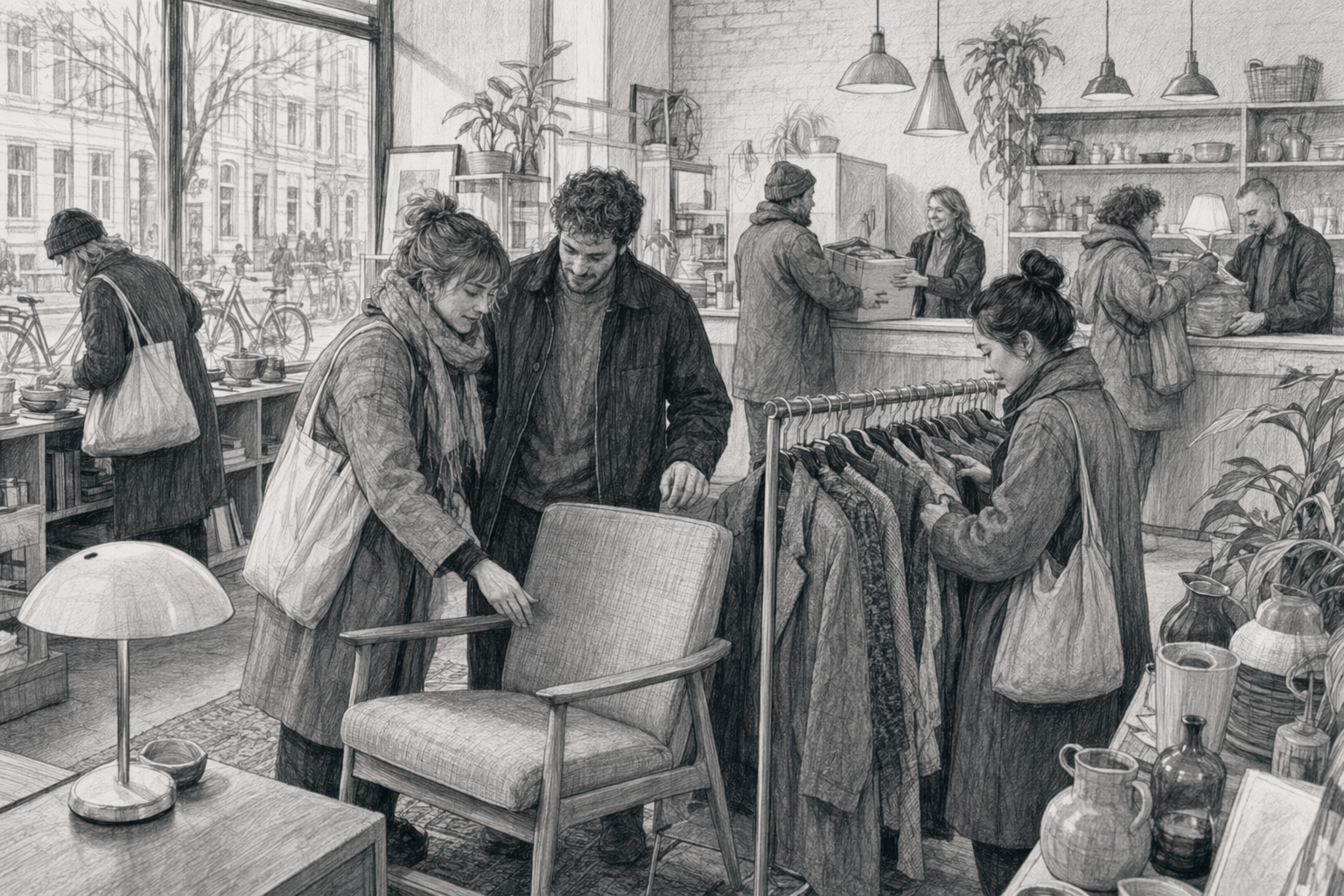
Demand is especially focused on goods that save a lot of money and last a long time. The municipality itself points to great potential in building materials, furniture and electronics, and building materials take up the most space among goods for increased recycling in Theme 1.
- Clothes and vintage finds
- Furniture for small apartments
- Lamps, kitchenware and books
- Electronics and materials for DIY
For stores like Genbro, this is an advantage. The breadth of the range matches what Copenhageners are actually looking for.
The municipality’s new initiatives to get more things recycled
Recycling spotters and more stations
Copenhagen is turning up the local solutions. The municipality has set up recycling spotters at all recycling stations and several local recycling stations, so that more usable items are caught before they end up as waste, according to the municipality’s supplementary package.
- The spots help to sort out useful things
- Local recycling stations make it easier to drop off close to home
- Longer opening hours lower the barrier to using the scheme
The easier it is to deliver, the less smoke goes to incineration.
White goods, packaging and home clearance
The municipality is now testing the recycling of white goods at the five large recycling stations. Used machines will be picked up, repaired and sold on, DR writes about the experiment in 2026.
At the same time, the city is running projects for recycled packaging and a new collaboration on home clearance, where up to five companies can test a model so that large, functional items get a second chance instead of being burned.
- Big things are sorted from the past
- More can be repaired or passed on
- Buyers get more goods into the recycling chain
For you as a buyer, it means a wider selection and more solid finds in stores like Genbro.
Why Copenhagen is investing so heavily in recycling
The goals towards 2030
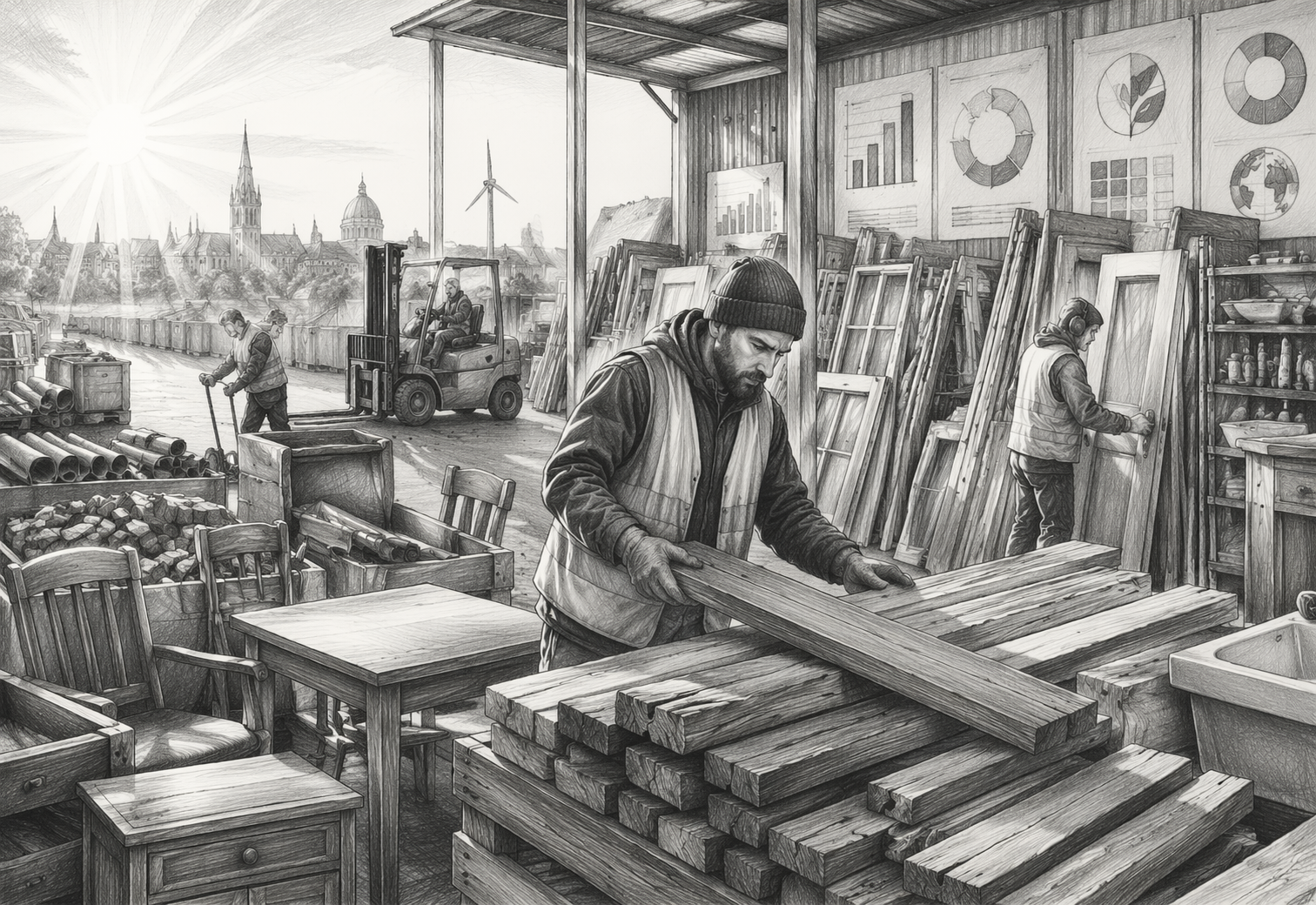
Copenhagen is investing heavily in recycling because the city has set very concrete goals towards 2030. In the municipality’s strategy , the goals include 10,000 tonnes of recycling from recycling centres, 60 per cent of actual recycling and 60,000 tonnes of construction waste for recycling. It is about the climate, less waste and better use of raw materials.
What drives development in the city?
The city is building on solutions that have already been initiated. The strategy for 2025-2030 points to more local recycling stations, local swap areas, partnerships and better access for citizens. It is also driven by the pressures of everyday life – small homes, many moves, and the need for cheaper, usable goods. Therefore, recycling is taking up more space in both politics and buying habits.
How Copenhageners will find the best second-hand purchases in 2026
Clothing, furniture, and the places that provide the most value
The best buys can be found where the selection changes quickly and where the store is large enough for both clothes and home finds. The Red Cross Capital has 15 second-hand stores in Copenhagen, and their megastores are strong in furniture, clothes and mixed goods. Genbro is also a good bet if you want to gather several categories in one stop and go for low prices.
- Clothing: choose stores with high rotation
- Furniture: go for bigger stores
- Mixed buying: prioritise large floor areas
The most value often comes early in the day or right after new submissions.
What should you look out for as a buyer?
Buy second-hand when the item actually replaces a new purchase. The City of Copenhagen points out that the climate effect is greatest when second-hand actually replaces new consumption.
- Check wear, zippers, joints and odors
- Compare price with new price, not just with other finds
- Measure furniture from home
- Buy what you need, not just the cheap
A good second-hand purchase is not only low price. It is a product you use for a long time.
Do you want to shop second-hand smarter in Copenhagen? Visit Genbro and find daily news, low prices and personal finds for the home.
Frequently asked questions
Q1: What are the latest trends in recycling in Copenhagen in 2026?
More local circulation, better sorting, more curated stores and increasing demand for furniture, retro and everyday goods at low prices.
Q2: How can recycling initiatives in Copenhagen contribute to sustainability in 2026?
They extend the life of goods, reduce waste and make it easier to buy used rather than new in everyday life.
Q3: What makes Genbro Copenhagen’s leading second-hand store in 2026?
Genbro stands out with a large selection, low prices, many new items daily and a wide mix of clothes, books, furniture and retro finds.
Conclusion
Copenhagen is pushing recycling forward in 2026 with more local solutions, tests and clear goals. The municipality itself points to 10,000 tonnes of recycling, while Affald KBH gathers the practical arrangements for Copenhageners.