


Quick Summary: Start by choosing a clear business model and niche so that you can manage sourcing and branding. Make sure you register your business correctly and understand the VAT rules for second-hand goods. Find a visible location with a layout that highlights great finds and makes sustainability clear. Plan purchases, pricing, and a simple opening to ensure a stable flow of goods and a good customer experience.
If you want to start a secondhand store in Denmark, you need to get the right thing on both goods, VAT, location and daily operations from the start. This is where many new owners stumble. This guide brings together the most important choices in one convenient plan to help you avoid costly mistakes. It is based on Danish requirements and business logic, so you get a realistic overview before committing to the store, warehouse and concept.
Step 1: Choose your business model and assortment
Your first choice controls both operations, VAT and purchasing. A non-profit model can be exempt from VAT, but only if the profits go entirely to a charity, the goods are donated and the work is unpaid, according to the Legal Guidance.
- Non-profit thrift store suitable for donations and volunteers
- Commercial secondhand store suits buying, commission and growth
Choose model before buying stock. This saves you errors in price, VAT and setup.
Then, choose a niche that customers quickly understand. It can be:
- Women’s Vintage
- Children’s clothing
- Furniture and housing
- Curated retro
A sharp niche makes purchasing, branding and store design easier. A wide store like Genbro can work well, but only if you have space, a high supply of goods and clear sorting. If you buy goods from private individuals for resale, it is typically not VAT-free, and second-hand VAT may be relevant.
Also Read: 8 smart tips for recycling in Copenhagen and eco-friendly lifestyle
Step 2: Get to grips with registration, VAT and the most important rules
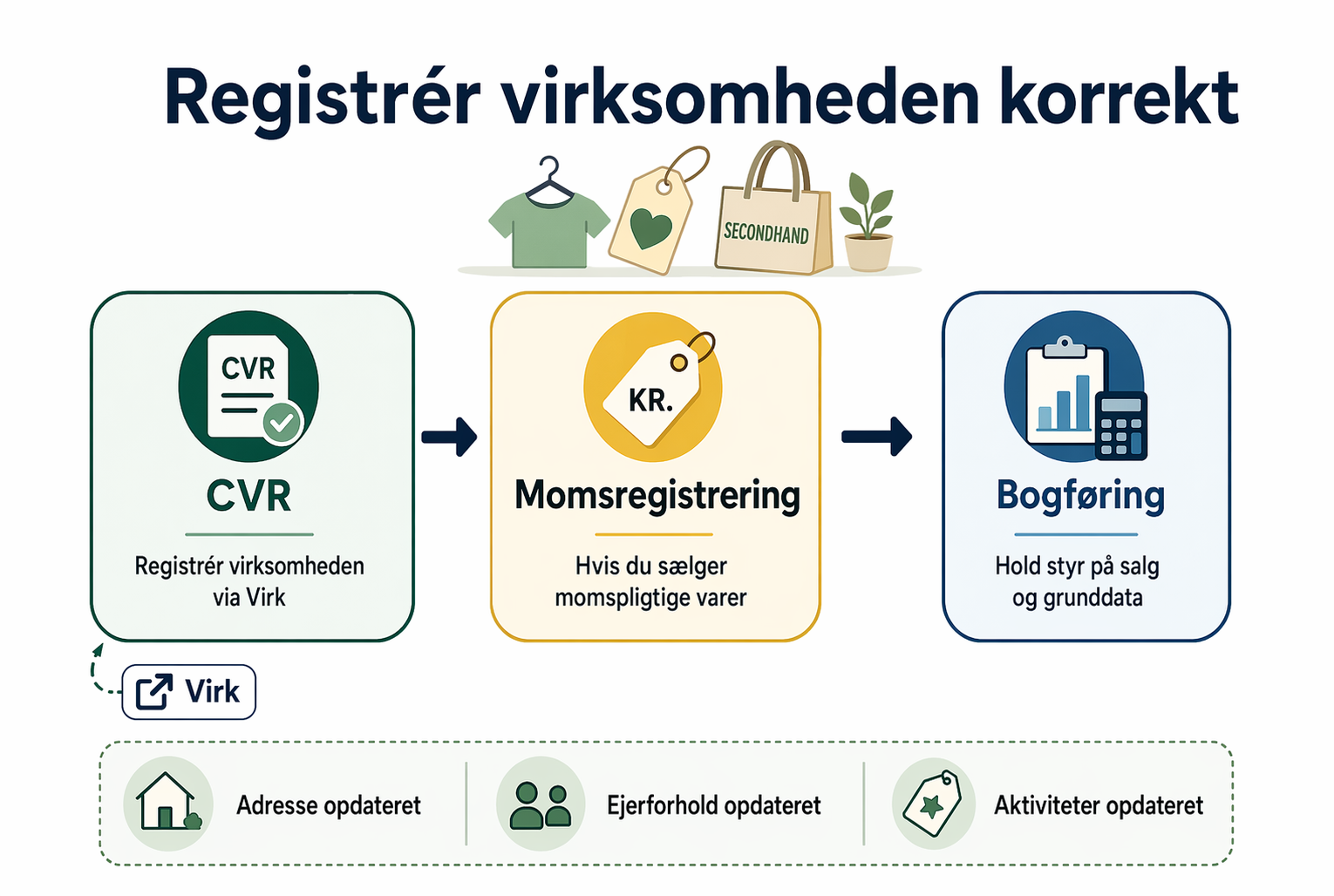
Register your business correctly
Start with the CVR number and the right company form. You register and change VAT, employer relationships and other basic data via Virk. If you sell goods subject to VAT, the company must be registered for VAT. Also, keep your address, ownership, and activities updated from day one.
Understanding the VAT rules for second-hand goods
Secondhand shops can often use the second-hand VAT scheme. Here, you only pay VAT on your profit, not on the entire sale price, according to SKAT’s guide to second-hand VAT. The scheme is voluntary, but it requires correct accounting, clear vouchers and control over where the goods come from.
Errors in vouchers and inventory management can be costly when checking.
Know the boundary between VAT-liable and VAT-exempt operations
Most goods in a secondhand shop are subject to VAT. VAT-free operation only applies in special cases. If you mix VAT-liable and VAT-exempt activities, you must be able to separate them in the accounts. This is especially important if you also run a donation, café or events on the side.
Step 3: Find location, décor, and customer experience that sells
Choose the right location
Location determines whether people go in. Look at daily traffic, visible façade, parking and neighbours who draw the same target group. By 2026, good micro-locations have become even more important, not just an address in the city, according to analysis on location and retail.
- Count foot traffic on weekdays and Saturdays
- Assess windows, access and goods delivery
- Avoid rooms without natural flow
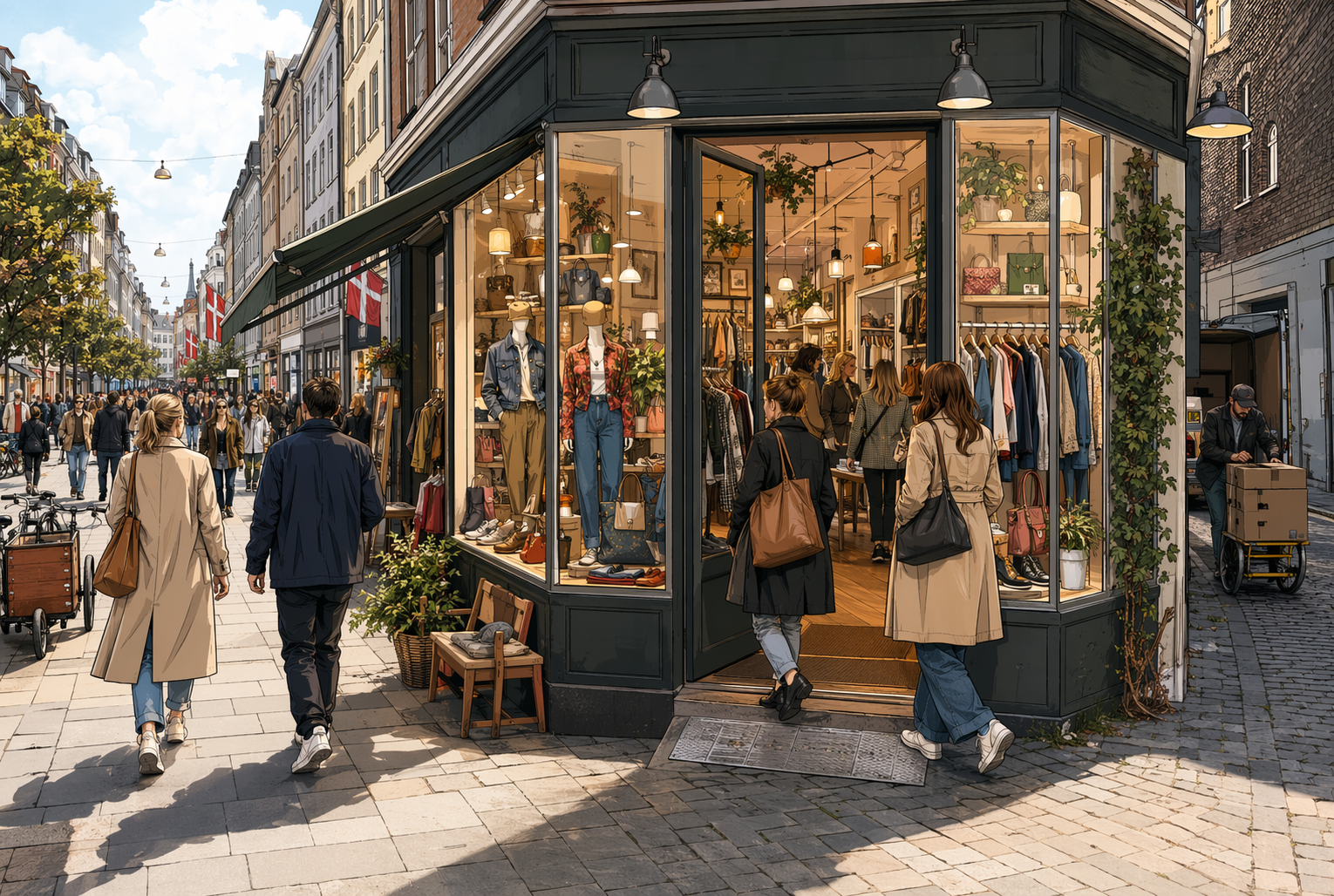
Create a store layout that highlights the finds
The layout should make it easy to discover good finds quickly. Danes often research online, but many purchases still end up in physical stores, according to DI Handel’s data on cross-channel purchases.
- Put the best products at the forefront
- Create wide paths and calm flow
- Use small themed areas rather than clutter
A secondhand shop should feel full – but never chaotic.
Make sustainability visible in the experience
Show sustainability in practice, not just on a sign.
- Use recycled furniture and fixtures
- Briefly state where the goods come from
- Offer paper bags or no bag
The experience should make the customer feel that a second-hand purchase is a good choice.
Also Read: Recycling Copenhagen: How second-hand shops are changing the city’s climate
Step 4: Plan Purchase, Pricing, and Opening
Build a stable flow of goods
You must secure items before opening. Make regular agreements with estates, private sellers, local clearing companies and handing in in store. Use a simple schedule for weekly receiving, sorting and replenishment so that the shelves never look empty.
Set prices that suit both the customer and the economy
Prices should be easy to understand and quick to set. Make fixed price bands by product type, condition and brand. Also remember your fixed expenses. If your turnover exceeds DKK 50,000 in 12 months, you must register for VAT, according to the Danish Tax Agency.
Prices that are too low result in busyness, but not always profits.
Launch the store with a simple opening plan
Plan a quiet opening with clear tasks. Registration of personally owned companies is free of charge via Virk. Make a checklist with signage, payment, bags, opening offers, and posts on local social media.
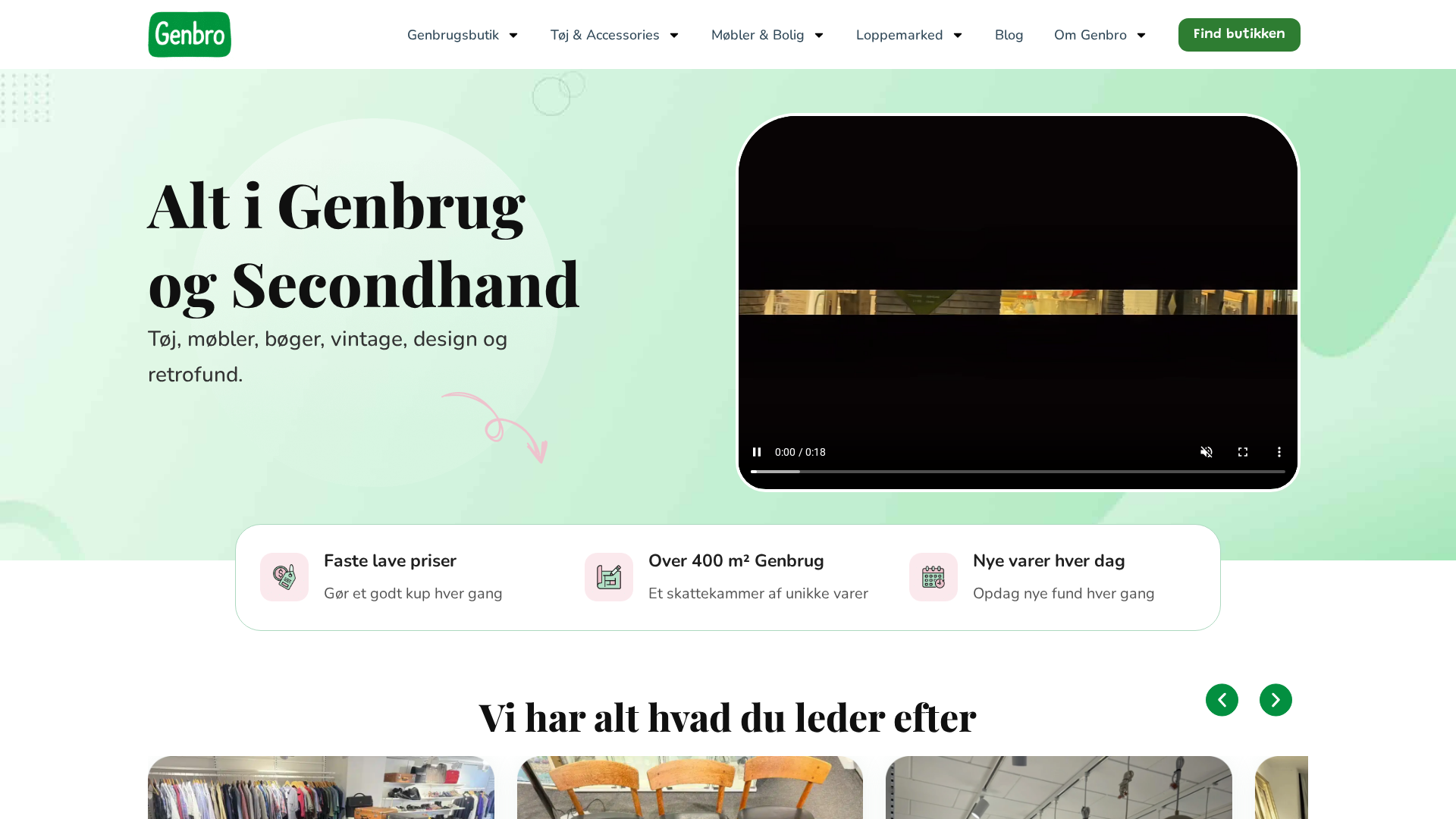
Want to see what a strong secondhand store feels like in practice? Visit Genbro and get inspiration for assortment, pricing and sustainable store experience.
Frequently asked questions
Q1: How do I start a successful secondhand store in Denmark with a focus on sustainability and unique items?
Start with niche, budget, CVR, VAT, suppliers and clear quality requirements. Use a simple store profile with a strong local identity. Make sustainability concrete with repair, sorting and transparent prices.
Q2: What are the most important practical steps to establish a secondhand store in Copenhagen and the rest of Denmark?
Make a business plan, choose the company form, register the company, check the lease, insurance and local regulations. Set up a system for purchasing, price marking, stock and returns. Test demand before big startup.
Q3: How do I choose the right location and design for my secondhand store in Denmark?
Choose an area with foot traffic, visible façade and rent you can bear. Decorate bright and uncluttered. Divide the store into zones so that customers can quickly find clothes, furniture, books and finds.
Conclusion
A strong secondhand store starts with control of registration, VAT, assortment and location. In particular, remember that VAT registration is usually required over DKK 50,000 in annual turnover, and that packaging rules can affect your store, according to the Danish Environmental Protection Agency.