


Quick Summary: Recycling in Copenhagen has become an important part of the city’s climate efforts, with more people choosing recycling over new ones to save resources and reduce CO2 emissions. Clothing, furniture and electronics are the items that make the biggest difference because they are often used for a short time or have a large environmental impact. The municipality is working to make recycling easier and more integrated into everyday life, so that more people can contribute to a more circular economy. When more people shop and deliver used goods, the city can significantly reduce waste and climate footprint.
Recycling Copenhagen takes up more space in the city’s climate plan than many people think. The City of Copenhagen has set a clear goal in the Resource and Waste Strategy 2030: 10,000 tonnes of recycling per year from the municipality’s recycling stations from 2030. The status for the first half of 2025 already shows 3,150 tonnes of recycling from the city’s stations. At the same time, Denmark produced 12.5 million tonnes of waste in 2023.
This makes Genbrug København more than cheap finds. It is about lower resource consumption, less waste and fewer CO2 emissions. When more people choose Sustainable Clothing, Recycled Books and Eco-Friendly Shopping, they support the city’s shift towards a more circular economy.
Here we look at how Genbrug København and Genbrugsbutik København make a real difference, which products make the most difference, and what the numbers say about the climate effect in practice.
Why recycling has become a climate factor in Copenhagen
The municipality’s goal for more recycling
Copenhagen no longer sees recycling as a niche. The municipality makes it part of the climate policy. In the Resource and Waste Strategy 2030, the goals are clear:
- 10,000 tonnes of products for recycling from recycling centres annually
- 60 percent actual recycling of household-like waste
- 30,000 tonnes of commercial waste for recycling
- 60,000 tonnes of construction and construction waste for recycling
| Goals towards 2030 | What it means |
|---|---|
| More recycling | Fewer new goods to be produced |
| More real recycling | Less waste is lost in the system |
| More local sorting | Lighter habits in everyday life |
The point is simple: When a chair, lamp or jacket is used again, the city saves both raw materials, energy and waste.
What the status shows in practice
The strategy is based on the fact that habits are already in the process of shifting. The municipality writes that from 2025, 17 local recycling stations are expected in the city, and that there will be more under the new plan. At the same time, the municipality’s status for sorting shows that 78 percent of Copenhageners think waste sorting is important, while 65 percent say that they sort all or a large part of their waste.
It shows two things:
- The will is there.
- The system still needs to make it easier.
For stores like Genbro, this is important. They make recycling concrete in everyday life, not just in strategies.
Also Read: Home
Which second-hand products make the biggest climate difference?
Clothes and textiles often make the biggest difference because we buy them often, use them briefly and throw away a lot. EU citizens spent an average of 19 kg of clothing, shoes and home textiles per person in 2022, and textiles are among the heaviest consumption categories for climate and the environment, according to the EEA’s Textiles Overview. When you buy a used jacket, shirt, or duvet cover, you typically avoid the need to produce a new item.
Recycling works best on items that would otherwise have been bought new.
Furniture, books, and electronics are also of high value, especially when they last a long time. Furniture is heavy goods with a lot of material, so life extension makes good sense. A study from KTH shows that reusing furniture can result in around 42% lower climate impact, and in better scenarios, up to 80%, according to the report. Books are simple to share and buy second-hand, while electronics can save a lot of resources if they work for a long time. In a store like Genbro , it is therefore especially worth looking for:
-
Clothing and home textiles
-
Chairs, tables and bookcases
-
Books and small electronics
How second-hand shops affect waste and CO2 in the city
Less new construction, less waste
When a chair, jacket or lamp gets a new home, the city avoids both waste and new consumption. Recycling keeps goods in use longer. This lowers the need to produce new things that would otherwise require raw materials, energy and transport.
- Less residual waste ends up in incineration
- Fewer new products need to be made and driven to stores
- More products are being used to the fullest
Second-hand shops therefore act as a local filter against use-and-throw-away. They take things out of the waste stream and back into everyday life. For stores like Genbro, this means that useful goods get value again instead of being discarded.
Every time a used product replaces a new purchase, the city’s total climate footprint typically decreases more than when the product is just sorted as waste.
Copenhagen’s climate ambitions are pushing ahead
The City of Copenhagen has made recycling part of the city’s plan. In the Resource and Waste Strategy 2030 , the goal is, among other things, 10,000 tonnes of recycling from local recycling and recycling stations per year by 2030 and 60 percent actual recycling of household-like waste.
This pushes the development in a clear direction:
- More things need to be used again
- Better sorting will improve quality
- Local actors must make recycling easy in everyday life
The municipality also describes that the strategy will minimize waste and increase reuse and recycling for the benefit of the environment and climate, according to the City of Copenhagen.
| Effect in the city | What thrift stores contribute |
|---|---|
| Less waste | Selling usable goods before they are discarded |
| Lower CO2 | Fewer new products to be produced |
| Stronger local culture | Effect in the city ## Where in Copenhagen recycling takes up the most space in everyday life Recycling takes up the most space where it is easy to use in a busy everyday life. This is especially true close to residential areas, cycle routes and local shopping streets. Local recycling stations as urban infrastructureCopenhagen currently has 5 large recycling stations and 13 local recycling stations, according to Affald KBH. The small stations are centrally located and are made for people who walk or cycle. Here you can drop off small items, take useful finds home and sort selected waste. > It works because recycling becomes part of the normal walk through the city. The municipality itself points out that visits increased from 167,022 in 2021 to 1,097,994 in 2024, while recycling volumes increased from 257 tonnes to 1,106 tonnes on the municipality’s status page. The second-hand shops as the next link in the chainWhen things are not exchanged directly, they often end up in the city’s second-hand shops. Here, recycling takes up the most space in Nørrebro, Amager, Vesterbro and the inner city, where shops are close to everyday life. This makes the purchase of used furniture, books and clothes more spontaneous. – The local recycling station makes it easy to drop off |
- The second-hand shop makes it easy to buy second-hand
- Together, they keep things in use longer
What thrift stores contribute
Less waste
Selling usable goods before they are discarded
Lower CO2
Fewer new products to be produced
Stronger local culture
Recycling becomes a normal part of everyday life |
For stores like Genbro , the point is simple: When recycling is on your normal route, more people choose it first.
How to shop more responsibly in recycling
What to look for in the store
Go for things that last a long time. Check seams, zippers, wood joints, wires, and wear before buying. Also, look for materials that can be used for a long time and can be easily repaired.
- Choose quality over quantity
- Avoid items with hidden damage
- Check if the product actually covers a need
- Buy usable clothes for recycling – not damaged textiles
Copenhagen will increase both reuse and real recycling towards 2030, according to the City of Copenhagen’s strategy.
| Checkpoint | Why it matters |
|---|---|
| Durability | Smaller new purchase later |
| Repairability | Longer life |
| Real need | Fewer wrong purchases |
What you can do before and after the purchase
Make a short list from home. Measure the space for furniture and set a budget. Then you avoid impulse buying.
After purchase, you can do three simple things:
- Wash, dry clean or dry the item correctly.
- Repair small bugs instantly.
- Donate when you’re not using it anymore.
Dry and clean textiles have a higher chance of being reused or recycled. Wet and dirty textiles should not be handed in for recycling, according to Affald KBH.
How Copenhagen will lift the recycling culture towards 2030
From pilot projects to fixed solutions
Copenhagen wants to make recycling easier in everyday life, not only as campaigns, but as fixed habits. In the municipality’s Resource and Waste Strategy 2030 , the goal is, among other things, 10,000 tonnes of recycling from the recycling stations and 60 per cent actual recycling by 2030. The municipality is building on what already works and increasing the number of solutions that can be used throughout the city.
This applies in particular:
- More local recycling stations
- Better exchange areas and access to drop-off
- Permanent collaborations with local recycling actors
- Testing new collection methods for relocations and events
The point is simple: Recycling must be easy enough for more people to actually do it.
What it means for citizens and shops
For citizens, the plan means more help close to home and fewer excuses to throw away useful things. For stores, it means a new framework for collaboration, more visibility and better flow of goods. In Theme 4 on recycling culture , the municipality sets the stage for networks, annual recycling traditions and a common goal for the entire city’s recycling.
It can provide value on several levels:
- Citizens will have easier access to return, exchange and repair.
- Stores can get more goods and stronger local partnerships.
- The city can move consumption away from new and over towards used.
For players like Genbro , this can mean more local customers, more deliveries and a stronger role in the green everyday life.
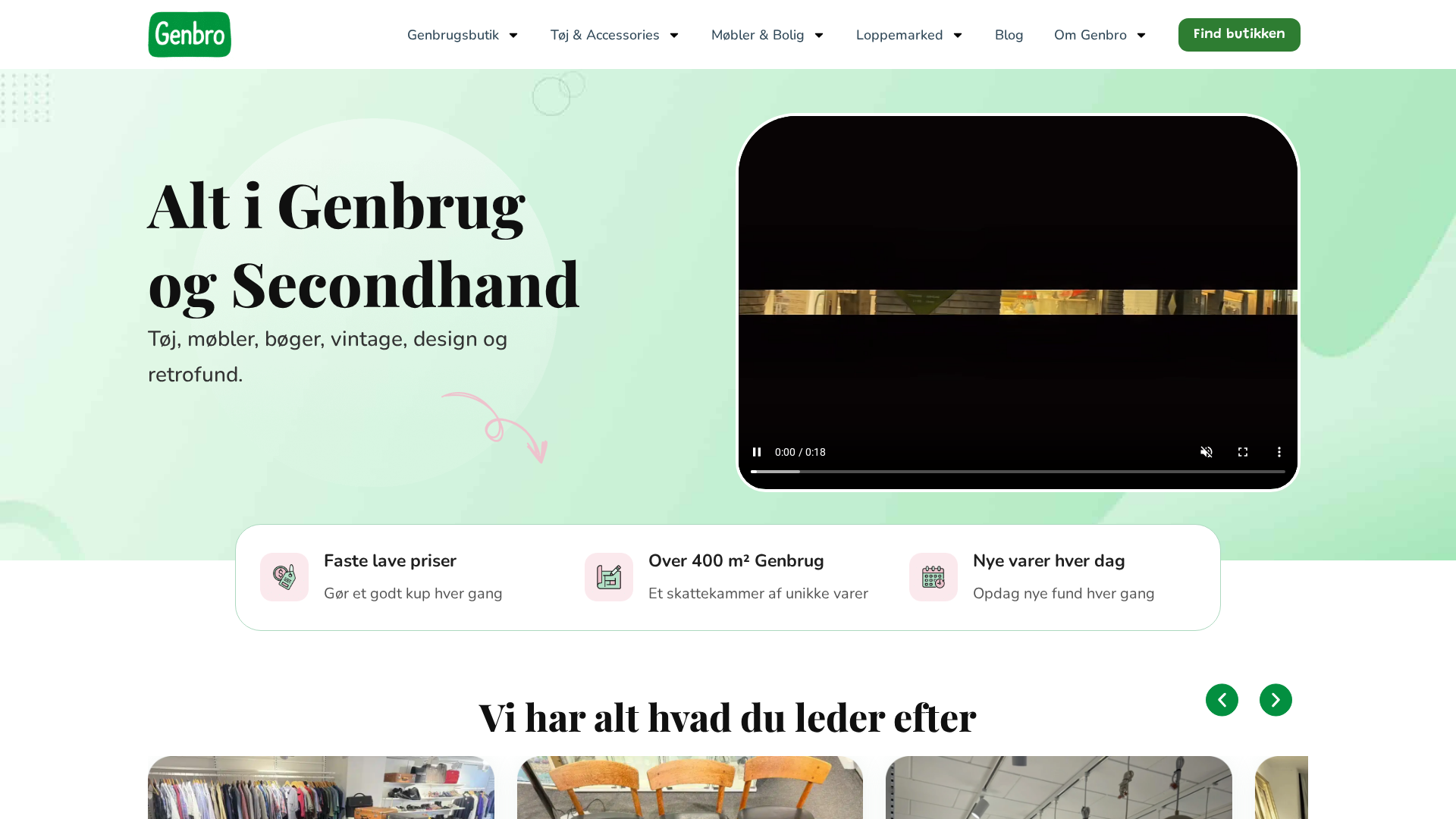
Do you want to do your part for the climate in Copenhagen immediately? Start at Genbro, where you will find clothes, furniture, books and retro finds at low prices. Stop by or plan your next second-hand purchase today and make sustainable choices easier.
Frequently asked questions
Q1: How do second-hand shops affect Copenhagen’s climate and environment today?
They extend the life of goods and reduce the need for new production. This saves raw materials, energy and transport. At the same time, they keep useful things out of the waste stream.
Q2: Which second-hand stores in Copenhagen play an important role in sustainability?
Stores with high turnover, local collection and wide selection make the most difference. Large players like Genbro can move many goods quickly and make responsible purchasing easy.
Q3: How does recycling contribute to reducing waste and CO2 emissions in Copenhagen?
When you buy used clothes, furniture or books, you often avoid the climate footprint of new goods. This reduces waste, resource consumption and emissions from production.
Q4: How can you as an environmentally conscious Copenhagener shop responsibly in second-hand shops?
Buy what you actually want to use. Check quality, materials and service life. Choose timeless things rather than impulse purchases, and hand in good items yourself.
Q5: How can recycling in Copenhagen support local environmental initiatives?
More recycling can strengthen local collections, social jobs and circular habits. It makes climate action concrete in everyday life and supports a more resource-smart city.
The best buy in a thrift store is often the one you use for many years.
Conclusion
Recycling in Copenhagen is not just a good habit. It is a concrete part of the city’s climate solution. The point is clear: When more things are shared, repaired and sold again, the need for new goods decreases, and this lowers the climate footprint.
The article points to three things in particular:
- Recycling works best locally when it’s easy to drop off, pick up and exchange.
- The municipality’s goals are concrete – including 10,000 tonnes of recycling from recycling stations and 60 percent actual recycling by 2030 according to Copenhagen’s Resource and Waste Strategy 2030.
- Culture matters – fixed habits, better sorting and more local offers move more than campaigns alone.
Copenhagen is already underway, but the effect depends on recycling becoming a regular part of everyday life and not just a choice once in a while.