


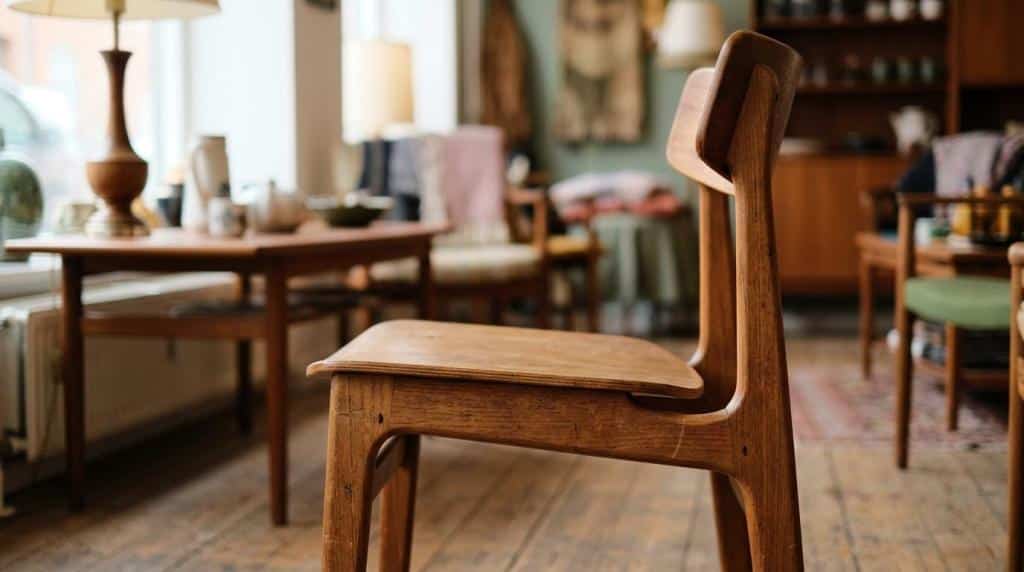
Good recycled furniture is rarely found by chance alone. The best purchases occur when an eye for quality meets a little patience, and when you know what to look for before you fall in love with the shape.
This is also why recycled furniture has become so attractive to many. They can provide more character, better materials and a more personal décor than a lot of new furniture in the same price range. At the same time, it is a practical way to buy wisely, without compromising on style or function.
Once you learn to spot a solid table, a well-designed bookcase or a chair with many good years to come, the hunt becomes much more precise. And often also far more fun.
Where can you find good recycled furniture?
The best finds rarely come from one place. If you want both good prices, variety and a higher probability of quality, it is wise to combine several channels. Physical stores allow you to label materials and test stability. Online marketplaces provide breadth. Curated stores provide a more manageable selection.
In Copenhagen , there is a particularly good environment for secondhand and vintage, because the range is large and the turnover is high. In Nørrebro, Vesterbro and in the inner districts, furniture is constantly appearing that is suitable for both small apartments, shared homes and more style-conscious homes. In other parts of the country, prices can be lower, and you often find strong utility items that may be less trendy, but very durable.
When you want to find recycled furniture effectively, these places are often the most relevant:
- Physical thrift stores
- DBA and other second-hand markets
- Auction houses with a focus on design
- Municipal recycling areas
- Curated second-hand shops
Curated stores are worth highlighting if you’d like to save time. Here, the selection is typically more deliberately composed, and you don’t have to sort through as much noise. A store like Genbro in Nørrebro works with a wide secondhand range and gets new items every day, which makes frequent visits extra relevant if you are looking for something specific or just want to be among the first to see new furniture.
How do you assess the condition and quality of recycled furniture?
The first thing many people look at is the surface. This is understandable, but not always the most important thing. Small scratches, color differences and general patina can be perfectly fine signs of use. The crucial thing is whether the construction is still sound.
Always start by testing the furniture physically if you have the opportunity. A table should be stable. A chair must not twist in the joints. Drawers must be able to run fairly easily, and doors must hang properly. Also look under the furniture and at the back. This is often where the honest clues appear.
Signs of patina in recycled furniture
Patina is not the same as injury. An old wooden table with few marks can easily be a better buy than a newer table in weaker materials. Patina can add character, and it is often a sign that the furniture has already proven its durability.
This is especially true for furniture in solid wood, metal or older quality veneer, where minor wear rarely changes function or lifespan significantly.
Signs of real damage in recycled furniture
Here, alarm bells should ring a little faster. Moisture, mould, strong odours, loose joints and swelling of sheet materials can be signs of problems that are expensive or difficult to correct. Upholstered furniture requires extra attention because comfort, hygiene and wear and tear are more difficult to assess from a quick glance alone.
Use this quick overview when you are faced with a possible purchase:
| Furniture type | What you need to check | Typical warning signs | When it’s still a good buy |
|---|---|---|---|
| Table | Stability, legs, table top | Lashes, cracks in joints, moisture damage | When the damage is cosmetic and the care is solid |
| Chair | Joints, backrest, seat | Squeaking, loose legs, crookedness | When it can be tightened and the material is strong |
| Chest of drawers | Drawers, back, bottom | Crooked drawers, smell, sway in construction | When rails and frame still work well |
| Sofa/armchair | Upholstery, fabric, smell, comfort | Coincidences, stains, smoke or pet odors | When the upholstery keeps its shape and the fabric is healthy |
| Bookcase/cabinet | Slope, shelves, backing | Swelling, misalignment, instability | When it stands straight and has only light surface wear |
A simple rule of thumb often works: Buy a piece of furniture with a slightly worn finish and strong construction rather than a nice piece of furniture with a weak construction.
What materials make recycled furniture more durable?
The material says a lot about how long a piece of furniture can last and how easy it is to repair. Solid wood is still among the most attractive choices because it can be sanded, oiled and repaired. This applies to dining tables, sideboards, bookcases and smaller storage furniture.
Metal frames are also strong, especially for tables, chairs, and shelves. They often withstand moving better than thinner sheet materials, and minor rust or surface wear can often be handled without much work. Quality leather can be a fine purchase if it is taken care of, while cheaper synthetic materials often show their age more quickly.
It is especially sheet metal furniture that requires sharp assessment. Once chipboard or MDF has taken on moisture, the material loses strength and it rarely comes back completely. Veneer can be good, but only if the substrate is still stable and the veneer does not peel off in large areas.
Older, quality furniture often wins on one thing that still means a lot: It is built to last longer than a single interior design phase.
What does recycled furniture actually cost?
The price of the sign is just the beginning. This is especially true for larger furniture, where transport, carrying and small repairs quickly become important. A cabinet for DKK 400 is not necessarily a good buy if you also need a van, new handles and a whole weekend to get it in order.
It makes more sense to think in terms of total cost than in lowest price. Many good buys are precisely in the field between cheap and durable. Here you will find furniture that is not necessarily sensationally cheap, but which provides a lot of value over time.
When considering the price, consider the whole package:
- Purchase price: the amount you pay now
- Transportation: van, stairs, carrying, or delivery
- Refurbishment: cleaner, oil, screws, felt pads or new fabric
- Time: pick-up, cleaning and any minor repairs
This is also where curated stores can be beneficial. When the furniture has already been selected with an eye for usability and style, the process becomes simpler and you spend less time sorting out mistakes.
Which recycled furniture provides the most value in everyday life?
Some furniture is an obvious second-hand purchase because it combines longevity, high function and reasonable price. Dining tables, bookcases, side tables, chests of drawers and lamps are often strong categories. They are relatively easy to assess, and minor traces of use rarely change the daily function.
For students and people in smaller apartments, storage and flexibility are often more important than perfect design history. A narrow chest of drawers, a small café table or a bookcase with good dimensions can be more valuable than a spectacular find that takes up too much space or is impractical to use.
Families and those with more space can look for sturdy dining tables, sideboards, and armchairs with strong materials. Here, recycling can often provide access to a quality that would be significantly more expensive as new.
The best purchase is rarely the most attention-grabbing. It’s the piece of furniture you actually use every day and still be happy with in two years.
How do you get more good finds in less time?
Timing matters a lot. Good recycled furniture often sells quickly, especially in urban areas with high demand. Therefore, it works better to look often and briefly than rarely and for a long time. Anyone who passes by regularly simply sees more.
This applies both online and in-store. On marketplaces, saved searches and quick contact can make a real difference. In physical stores, it’s all about rhythm. If a store receives new items on an ongoing basis, the chance of finding increases significantly when you come back again instead of only looking once.
A more effective hunt typically starts with a few fixed habits:
- Visit often: the best things rarely last long
- Goals from home
- Save searches online
- First, check the construction: cosmetics can almost always be improved
- Take pictures of your room with you
The last piece of advice is underestimated. When you have measurements and pictures ready, it becomes much easier to assess whether a piece of furniture actually fits in. This saves both impulse purchases and disappointments.
Why Curated Thrift Stores Make Choosing Easier
There is a big difference between looking in a very broad second-hand market and going into a store where the selection is already sorted with an eye for style, function and price level. Both can lead to good finds, but they suit different needs.
If the goal is the lowest price and the largest volume, broad marketplaces are obvious. If the goal is a more manageable selection, a higher likelihood of coherence in the assortment and the opportunity to find furniture that fits into a modern home with character, then curated stores are often a strong path.
In Nørrebro, this is precisely part of the strength of stores with a continuous flow of goods and fixed low prices. At Genbro, this means that you can both come for a specific item and at the same time be open to the unexpected find, whether it is a small chest of drawers, a lamp or a table that suddenly fits perfectly into the home.
Good recycled furniture does not require luck alone. They require an eye for materials, a sense of proportion and a desire to choose quality, even when it is not brand new. Once those habits are there, recycling doesn’t just become a way to buy furniture. It will be a sharper way of decorating.


